Digitally Guided All On 6 Implants With Guaranteed Immediate Loading  service image
Digitally Guided All On 6 Implants With Guaranteed Immediate Loading

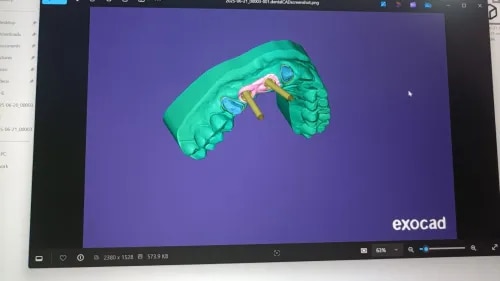
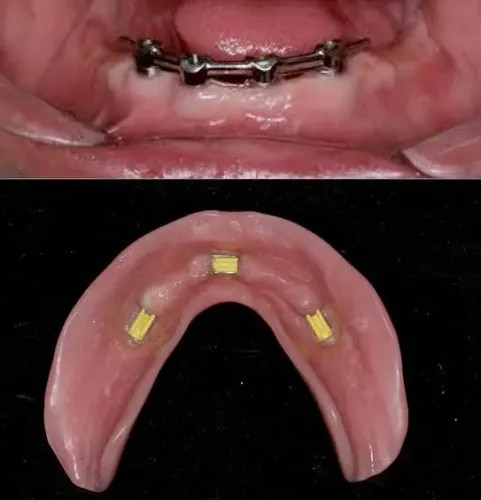
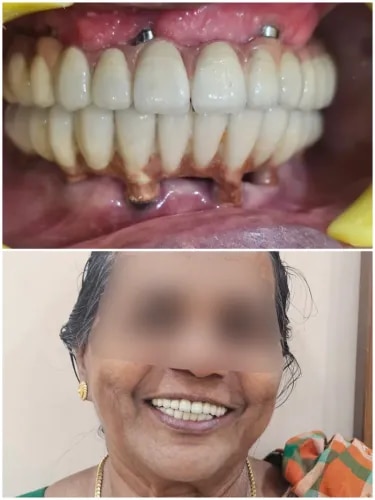
We at Lakshmi dental care, porur best dental practice with a consistent track record provide immediate replacement for one hundred percent when supported by CBCT guided implant placement . Our patients will leave the clinic with a full set of provisional replacements ( artificial teeth or immediate replacement ) after all on 6 or all on 4 implant surgery . We provide 3 D Printed resin temporaries that last for 3 to 4 months without any fracture. We provide permanant ceramic bridges or malo bridges after 3 months.

Post And Core Buildup service image
Post And Core Buildup

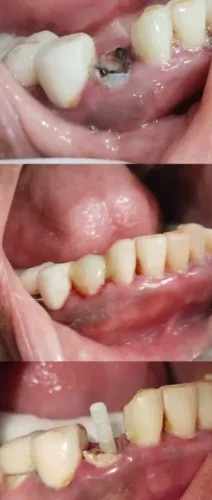
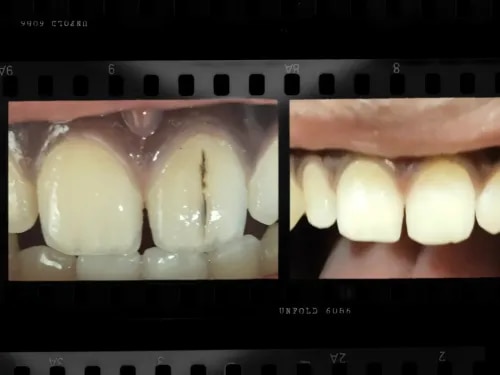
Dental Post and Core Crown   A dental post is a threaded metal shaft or a fiber that is inserted into the root canal of the tooth. This is usually placed if a tooth is too weak to support a tooth or a dental appliance. There are two different types of dental posts. A custom-made post is made in a lab and consists of an impression of the root canal and will have the core built onto it. A prefabricated post comes in various shapes and sizes and is placed straight into the root canal. They can be stainless steel or carbon fibre.   A post crown is an amalgamation of a post that goes deep into the root canal, a core and a dental crown. These three elements are always present, although sometimes the core may be made into the post or built up over the post after it has been cemented in. A post and core crown can only be done if the tooth has had prior root canal treatment as the post goes deep down into the root canal for extra support of the core. If there is enough tooth left, a filling may be the suitable restoration for the tooth. If there is a small amount of tooth a filling will be a lot weaker and may fracture and will not last which is why post and core crown will be the best option. Placing the post first will strengthen the whole structure and will make it easier to bond onto the remaining tooth. If a tooth has already had root canal treatment than the post can go into the root canal straight away to build up a core to place a crown. If the tooth has not had root canal treatment, this will have to be done first to place the post. Otherwise, the tooth will have to be extracted and an implant is the only other option. If root canal treatment has been completed but the tooth is weak, a post will help provide structure for a stronger core and crown. This is usually used to prevent a crown breaking off with a core inside it. If this occurs a post can be placed into the root canal and a core can be built up over it with a better grip for the crown to then be put on.   The procedure of a dental post and core crown includes drilling into the widest root canal and placing the post in it. The longer the post the more support the core and crown will have. It is important to leave part of the root filling at the bottom of the root to keep it sealed. An x-ray will then be taken to ensure that the post is far down enough and is in line with the canal. Once the post is put in place, composite filling will be built up around it. This is known as a direct post and core. A custom-made post and core may be an option if the canal is an awkward shape. An impression post with material will be placed in the canal to copy the shape and will then be sent to a lab. It will then return with the core attached to the post so there is no need for the composite build up. Once this post and core is fitted impressions will be taken for the crown and placed once it has come back from the lab. A crown must be placed over any tooth with a post to protect it. badly broken tooth can still be saved from removal by these post and core buildups. this may help to last them for few more years thus an alternative to dental implant . for enquires visit best dentist to save badly or grossly broken tooth at Lakshmi dental care,Porur

Pulpectomy And Stainless Steel Crown  service image
Pulpectomy And Stainless Steel Crown

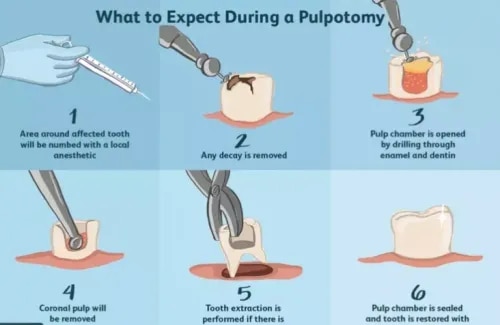
A pulpotomy is a dental procedure that can be performed on both adults and children but is commonly used to treat infect baby (primary) teeth in childiren. This type of infection happens when tooth decay reaches the pulp inside the tooth. During a pulpotomy, the pulp of the tooth in the crown (the part of the tooth that is visible) is removed and the pulp in the root canal is left intact. Table of Contents  Purpose Risks Before the Procedure During the Procedure After the Procedure A pulpotomy is a dental procedure that can be performed on both adults and children but is commonly used to treat infect baby (primary) teeth in childiren. This type of infection happens when tooth decay reaches the pulp inside the tooth. During a pulpotomy, the pulp of the tooth in the crown (the part of the tooth that is visible) is removed and the pulp in the root canal is left intact Purpose of Pulpotomy If your child complains of pain when cold, hot, or sweet things touch their tooth or teeth, it may mean that they have pulpitis. Pulpitis is the inflammation of the pulp and its main cause is untreated cavities (tooth decay). This tooth sensitivity is usually the first sign that your child may have caries. Your healthcare provider will recommend that your child undergo a pulpotomy if, upon dental examination, it is discovered that your child has caries (tooth decay) that has affected the pulp in the crown. It is also done when the tooth decay is so close to the pulp in the crown that removing the decay will expose the pulp. This examination can either be by physical examination of the tooth or by X-ray. If it is discovered that your child has irreversible pulpitis caused by tooth decay—where the pulp in the tooth is severely damaged—then a pulpotomy will not be performed. Instead, your child will have to undergo a pulpectomy or tooth extraction. Although much less common, a pulpotomy can also be done when your child has sustained serious physical trauma to the tooth. A pulpotomy is usually done so that the tooth and pulp in the root of the tooth can be preserved We at Lakshmi dental care , have best paedodontist available for consultation and providing treatment to your kids. We perform pulpectomy followed by stainless crown or tooth colored zirconia cap all at affordable price ranges from 5000 to 7000 at best dental clinic in Porur at Lakshmi dental care . for enquiries to meet our best kid dentist or Paedodontist visit us or contact 044 42816021 for enquiries.

Invisible Braces  service image
Invisible Braces

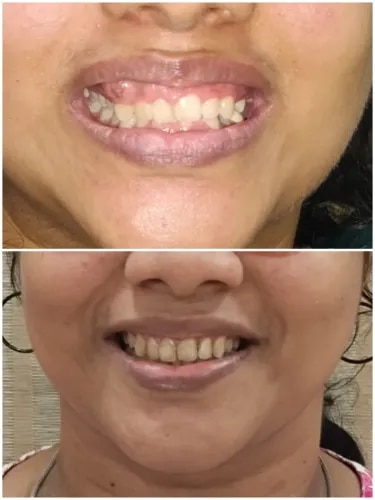
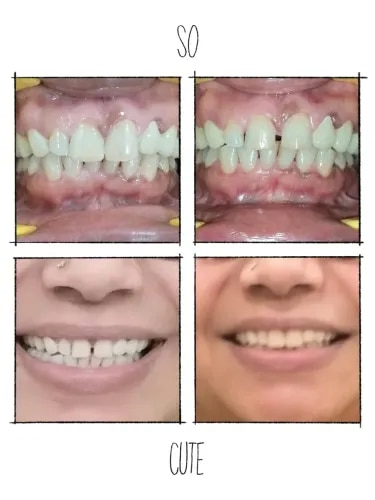
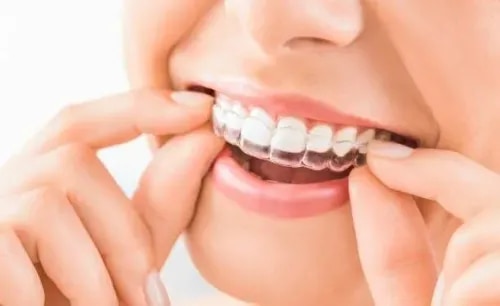
Straight teeth and a revitalized smile may no longer need to come from a mouth full of unattractive wire and bracket braces. Enhancing self-esteem and physical confidence, invisible braces offer an esthetic and barely visible alternative to conventional wire/bracket braces. While invisible braces may not be suitable for certain misalignment cases or the complex bite problems that are better addressed by traditional orthodontics, invisible braces can be used to treat the following conditions: deep bite , proclined upper teeth Crowded or widely spaced teeth Crooked teeth Invisible braces are designed for adults and older teenagers . Children and younger teenagers faced with orthodontic problems will require traditional metal braces with brackets/wires on the front of the teeth. However, only your dentist or orthodontist can determine if you are a candidate. The alternative treatment was designed primarily for adults due to the need for absolute and rigid cooperation; the “trays” are worn 22 hours per day and should not be forgotten or lost. These types of braces are made of transparent thermoplastic sheets and are called as clear alginers. we at Lakshmi dental care provide all brands of aligners that are currently available . Types Popular types of invisible braces include ceramic brackets or braces and clear aligners. Ceramic braces are just like metal braces, except that they use tooth-colored brackets (and sometimes tooth-colored wires) rather than metal to straighten teeth. Generally non-staining, the tooth-colored ceramic “blends” with your teeth, making them less noticeable than metal, but not as “invisible” as inside braces or clear aligners. “Ceramic, or “clear,” braces are made of composite materials that are weaker and more brittle than their metal counterpart. Ceramic brackets are larger than metal brackets and require small rubber bands, or ligatures, (or built in spring clips on “self-ligating” brackets) to hold them to the arch wire. Because the ligatures are white or clear, they can stain. However, staining is not a big problem because ligatures are changed every time you get an adjustment (generally monthly). The “self-ligatiing” clips do not require retying with wires or elastics. Also, like metal braces, ceramic brackets are not removable until treatment is completed . Clear aligners or invisible braces  (including such brands as Align Technologies’ Invisalign and smile alginers ) are a series of clear, removable aligners custom-fit to your teeth to provide virtually irritation-free treatment with minimal adjustment discomfort. Clear aligners are nearly invisible, minimally invasive and resistant to clouding from wear. With clear aligners, there are no brackets to come off or wires to break and poke. Clear aligners can be removed for eating, drinking and special events, making it easier to brush and floss. However, since clear aligners are removable, they may require more motivation and self-discipline to wear consistently, and they are easier to misplace or lose. Lost clear aligners may result in treatment delays and additional replacement costs. While fairly comfortable, clear aligners can cause discomfort or mild pain, particularly at the beginning when new aligners are placed and exert pressure on the teeth to move them. Additionally, clear aligners are available only from dentists or orthodontists that are manufacturer-certified and trained to offer them; they also may require special and costly maintenance. For example, Invisalign’s custom brand cleansers are available only from its manufacturer and are relatively expensive compared to traditional cleansers used for orthodontic retainers. Clear aligners are made after your dentist/orthodontist takes three-dimensional impressions of your teeth and sends them to a manufacturer-specific laboratory that fabricates your custom-fit clear aligners using computerized technology. These aligners are then sent to your dentist/orthodontist to be tried on and evaluated for suitability. Clear aligners are provided in sets. The number of aligners will depend on your specific orthodontic problem. You will wear each new aligner set for a specified amount of time, removing them only to eat, drink, brush and floss. With each new aligner set, your teeth slowly adjust and gradually realign to your desired smile. At periodic visits, your dentist/orthodontist will provide the next aligner set and evaluate your progress throughout treatment. Revision aligners are often requested at the end of the first series of aligners to correct any unfinished detailing. Length of Treatment The length of treatment depends on your situation and the type of invisible braces you are wearing. Typically, braces are worn from 18 to 24 months, though they are sometimes worn longer. Metal braces work the best because they are made from the strongest materials. Ceramic braces, while strong and better looking, often take more time because they are not as strong as metal braces. Inside braces also can take more time to work effectively. The treatment times with clear aligners vary. For example, Invisalign treatment, typically requiring 20 to 30 aligners for the upper and lower teeth, usually averages nine to 15 months to complete. ClearCorrect treatment times vary from 12 to 24 months and depends on the specific alignment problem; treatment for moderate cases requires 32 steps of treatment, delivered in eight phases, while minor cases require 12 steps of treatment, delivered in three phases.

Contact Us

Live Chat

Connect over WhatsApp to resolve your queries realtime.